Identigo
Streamlined Employee Verification for Businesses of Every Size
Overview
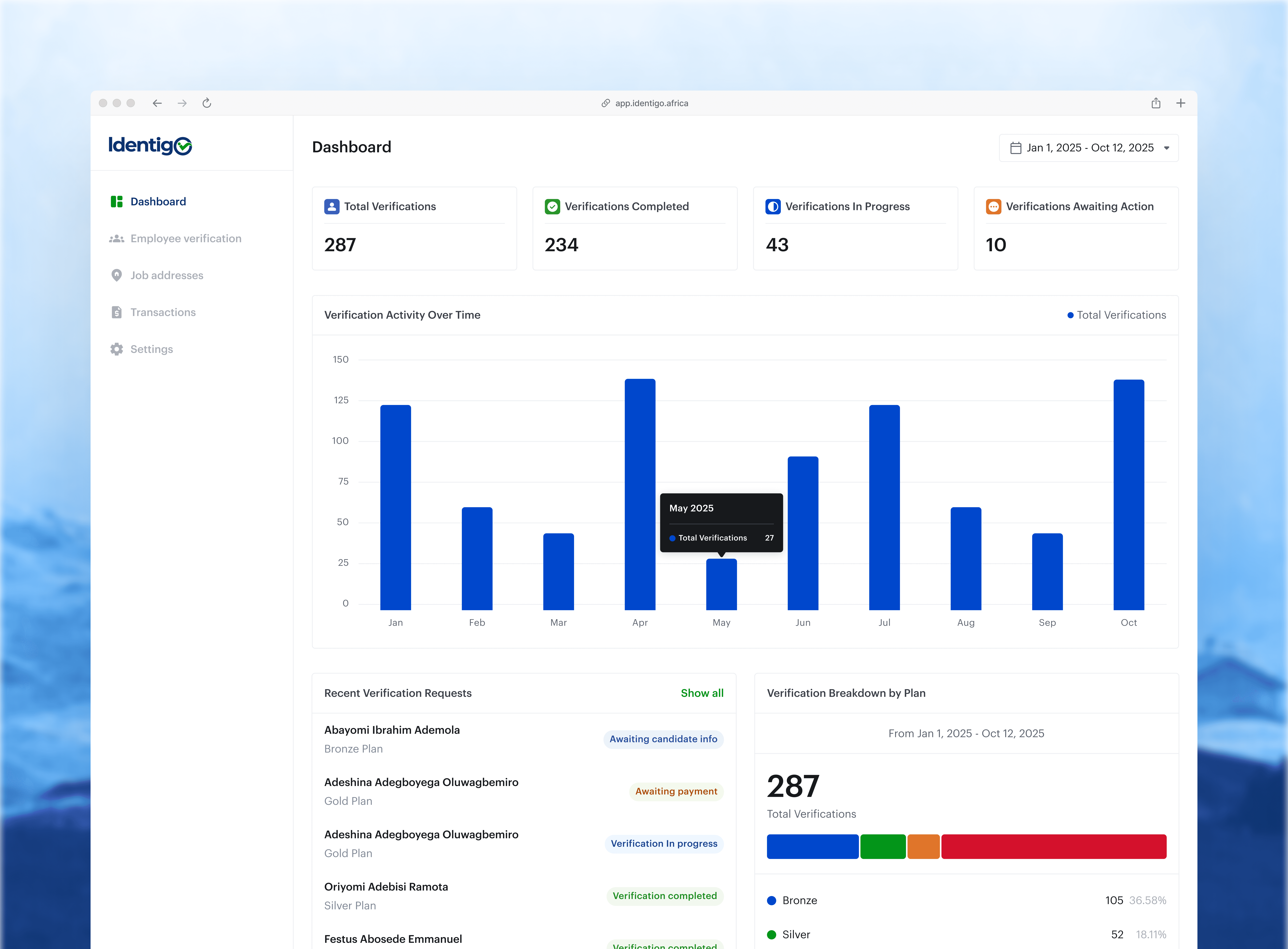
In 2025, I led the end to end design of Identigo’s employee verification platform, building a responsive and user centric experience for businesses running background checks at scale. As the sole designer, I worked closely with stakeholders and engineering team to bring the vision to life, from early discovery through high fidelity prototypes.
Through research and competitive analysis, I designed a robust, unified system that keeps the Identigo experience consistent across devices and workflows. The result is a platform built to stand out in the verification space, tailored to the real needs of employers across different business types.
Why are we doing this?
Hiring should not stall because of background checks. Yet, for many employers and HR teams, verification is still slow, expensive, and unclear, often driven by outdated tools, scattered information, and poor visibility into progress. The result is delayed hiring, frustrated candidates, and disrupted operations.
For small businesses, it is even tougher. They need a fast, simple way to verify employees without the complexity or cost of enterprise solutions.
Key Challenges
What we aim to achieve
Our goals were ambitious, but grounded in real employer needs. I aimed to simplify verification, reduce turnaround time, and create a transparent process that scales across business sizes.
Taking a deep dive
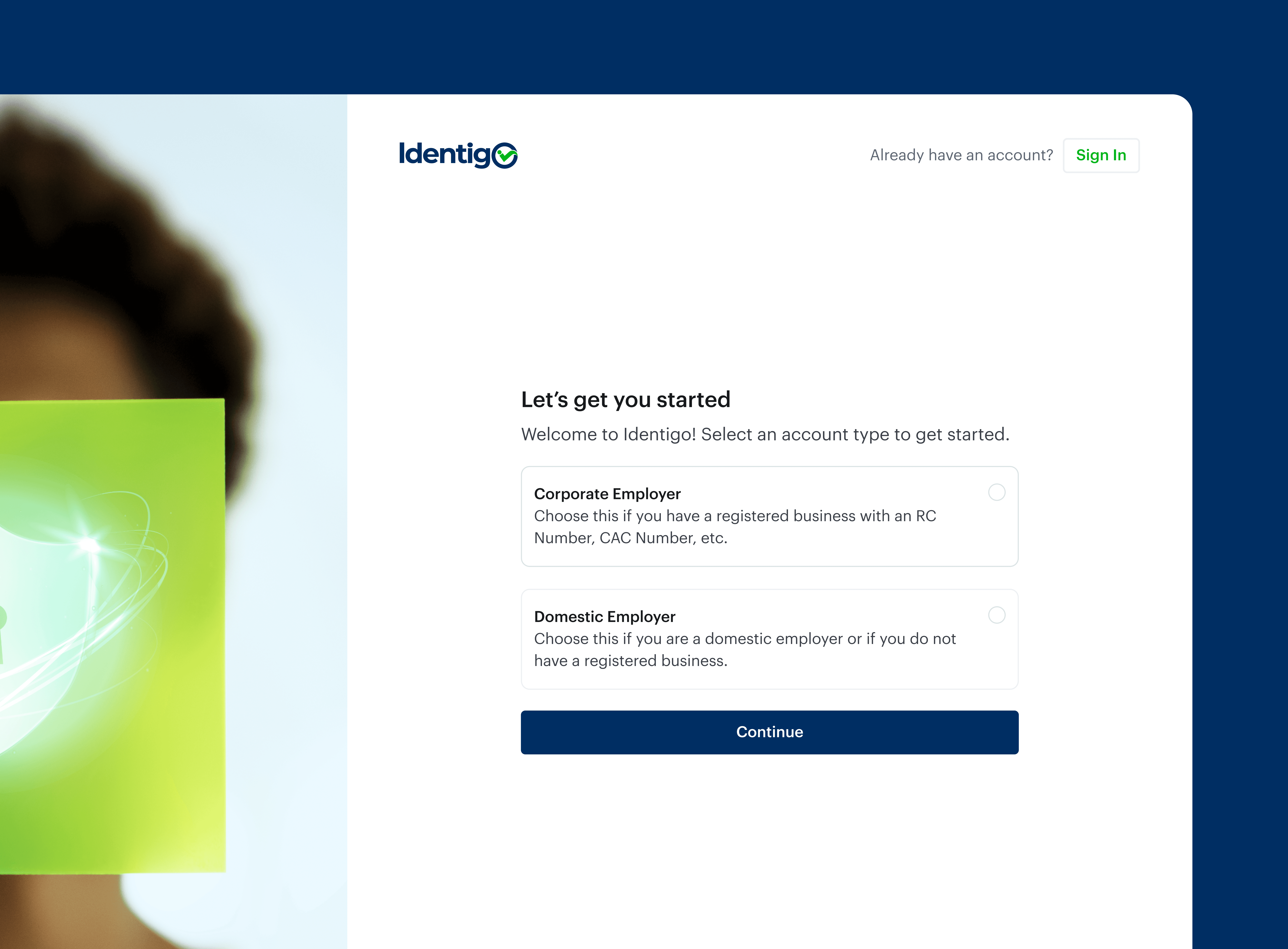
To understand what was slowing down background checks, I worked closely with key stakeholders, including employers, internal ops, and engineers. I reviewed real verification requests and support conversations, then spoke with employers to uncover where delays, confusion, and drop offs were happening. I mapped the end to end workflow to identify friction points and validate what could be simplified in the MVP. These insights shaped a guided verification flow and flexible methods that fit different business sizes.
Design process
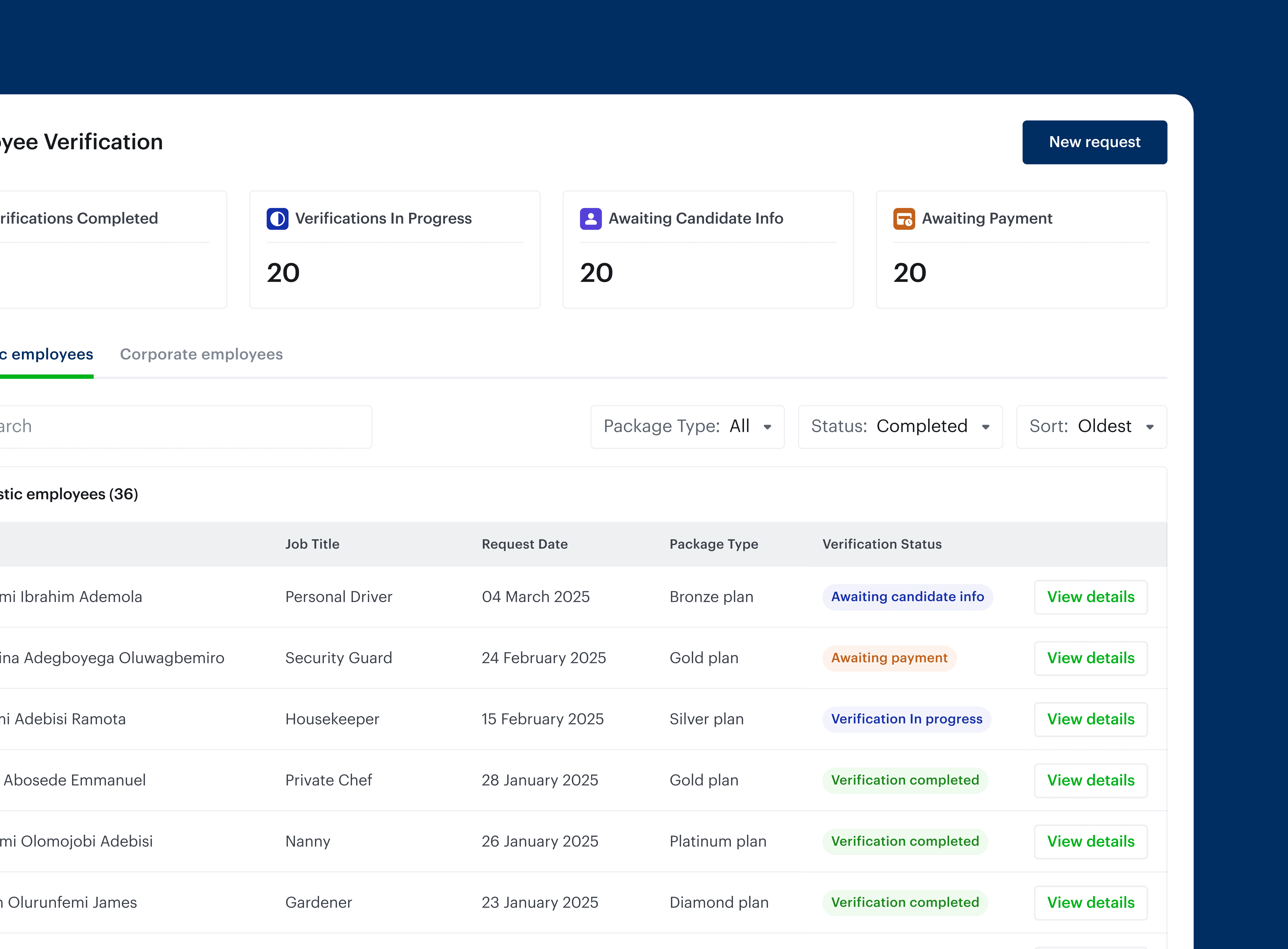
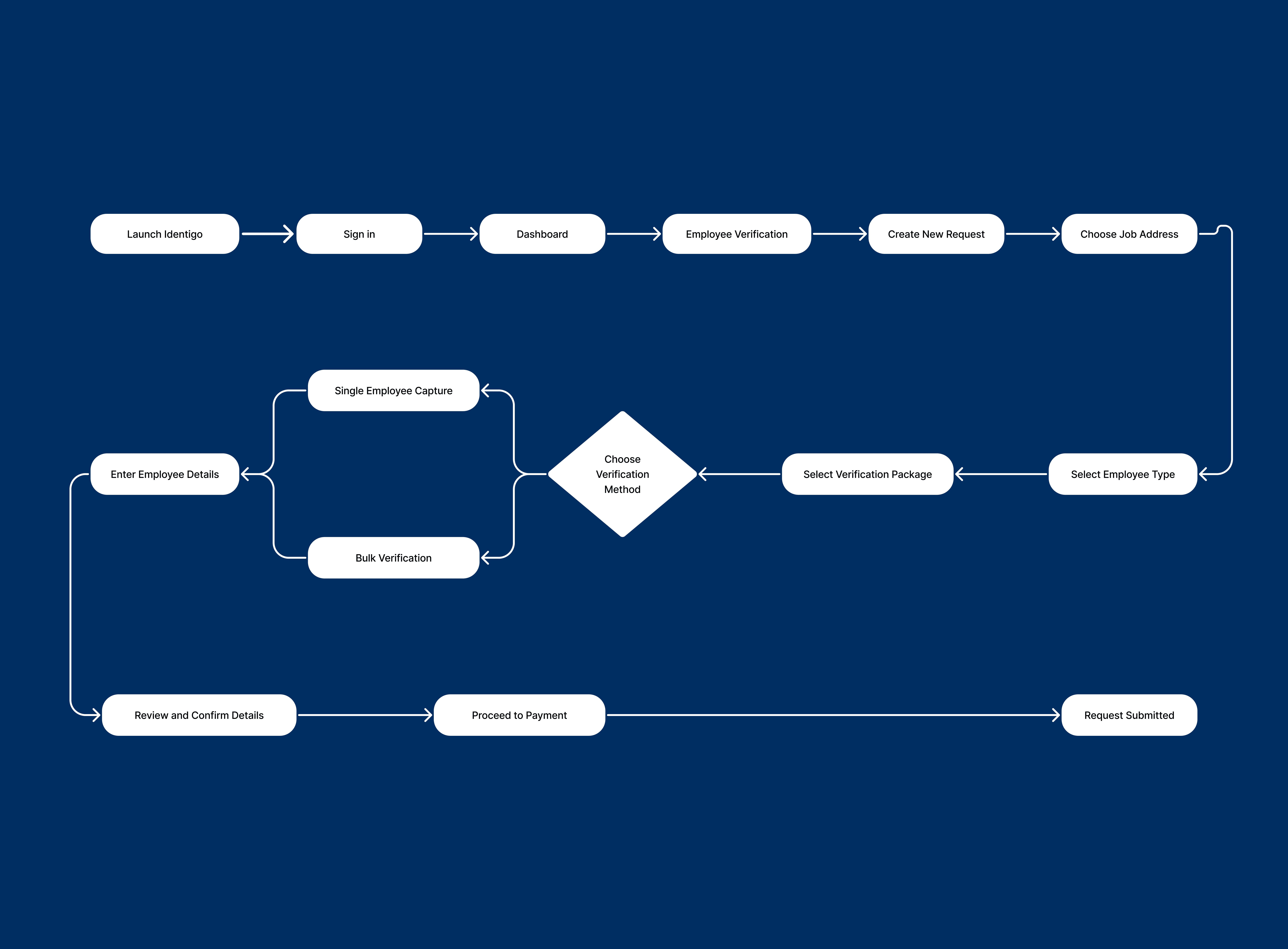
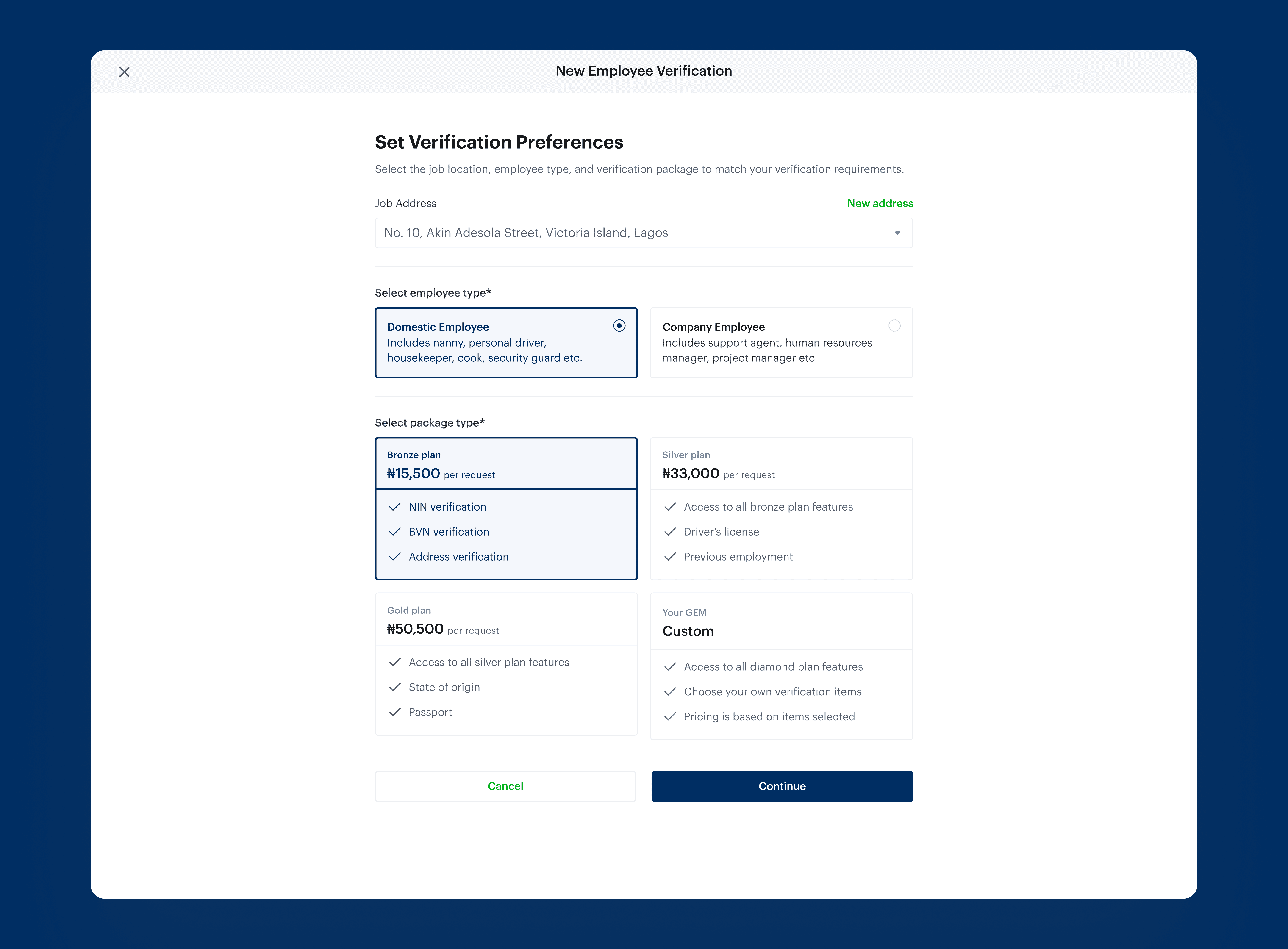
I started by mapping the end to end verification journey, from selecting employee type and packages to choosing a verification method, submitting details, and tracking status. With that foundation, I moved into Figma to explore early wireframes, test different flow structures, and build high fidelity prototypes that prioritized speed, clarity, and trust.
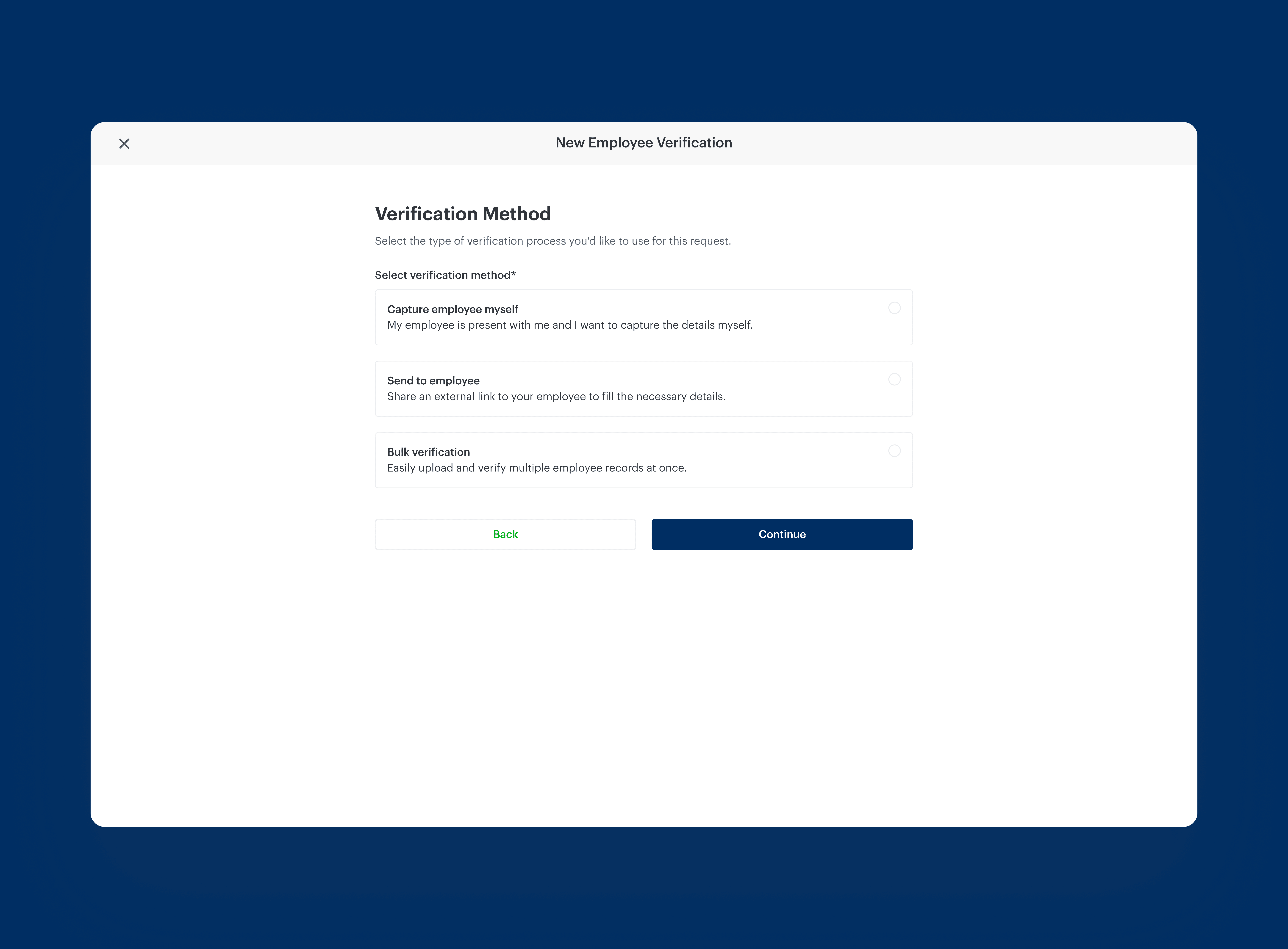
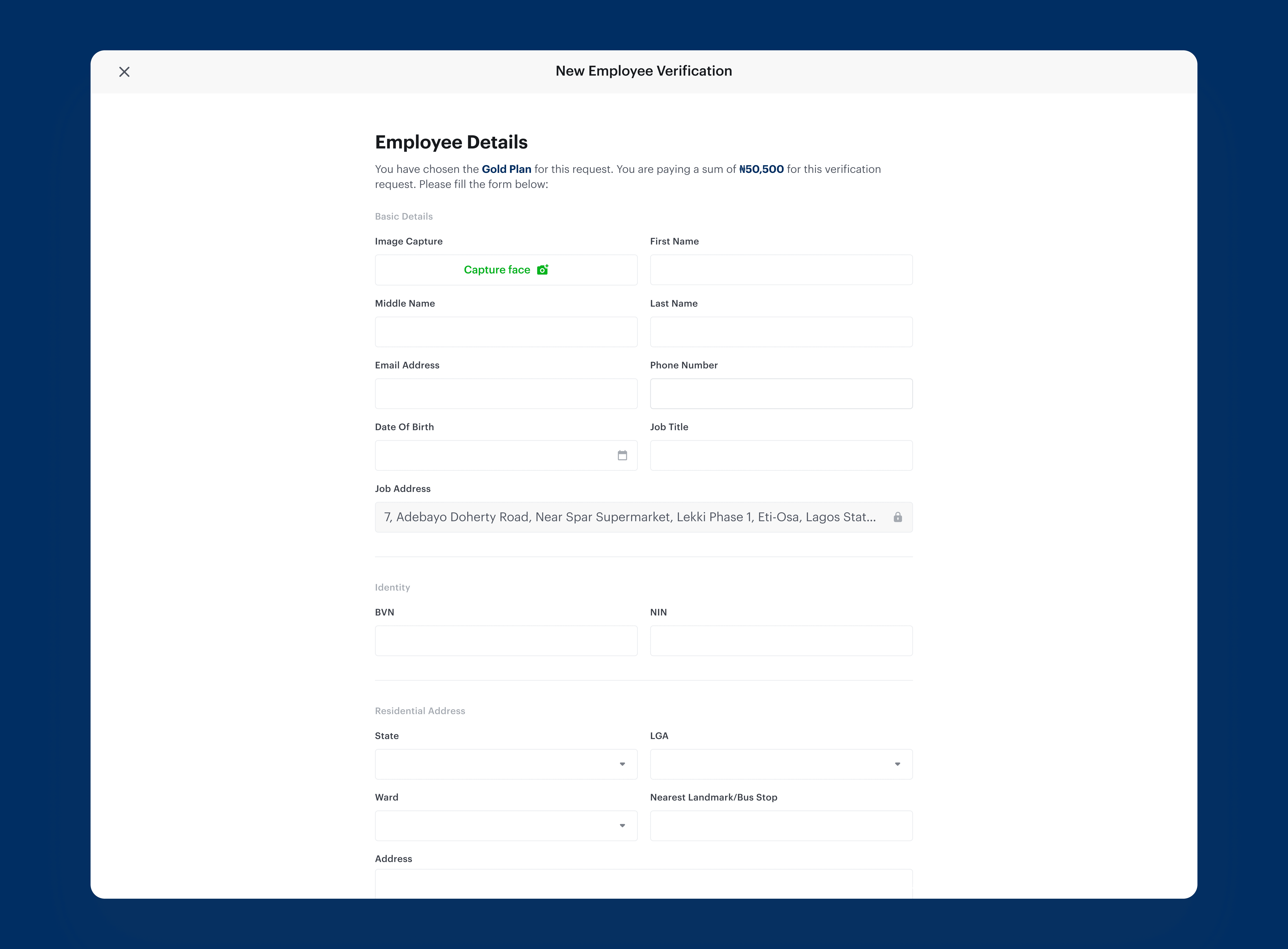
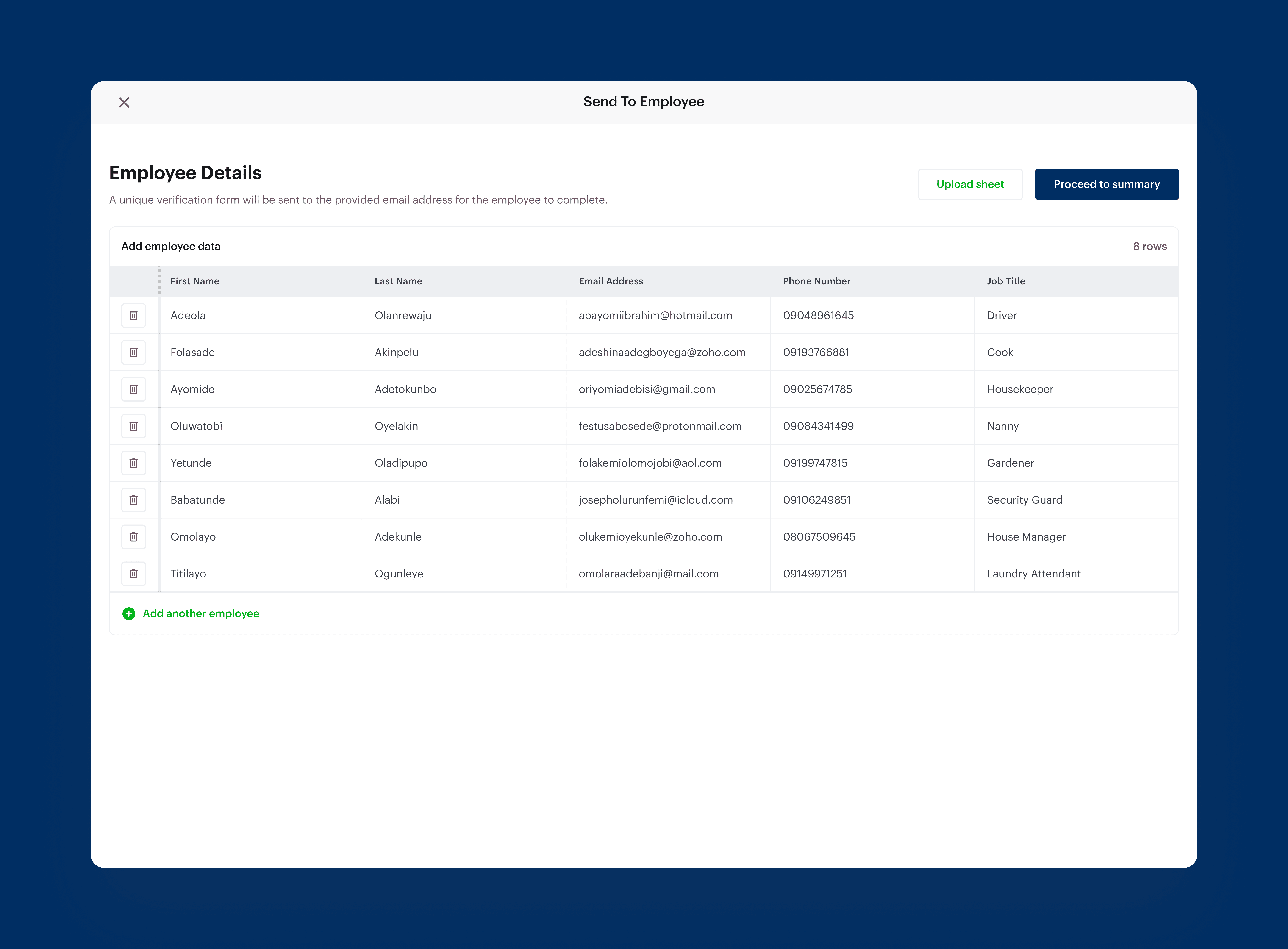
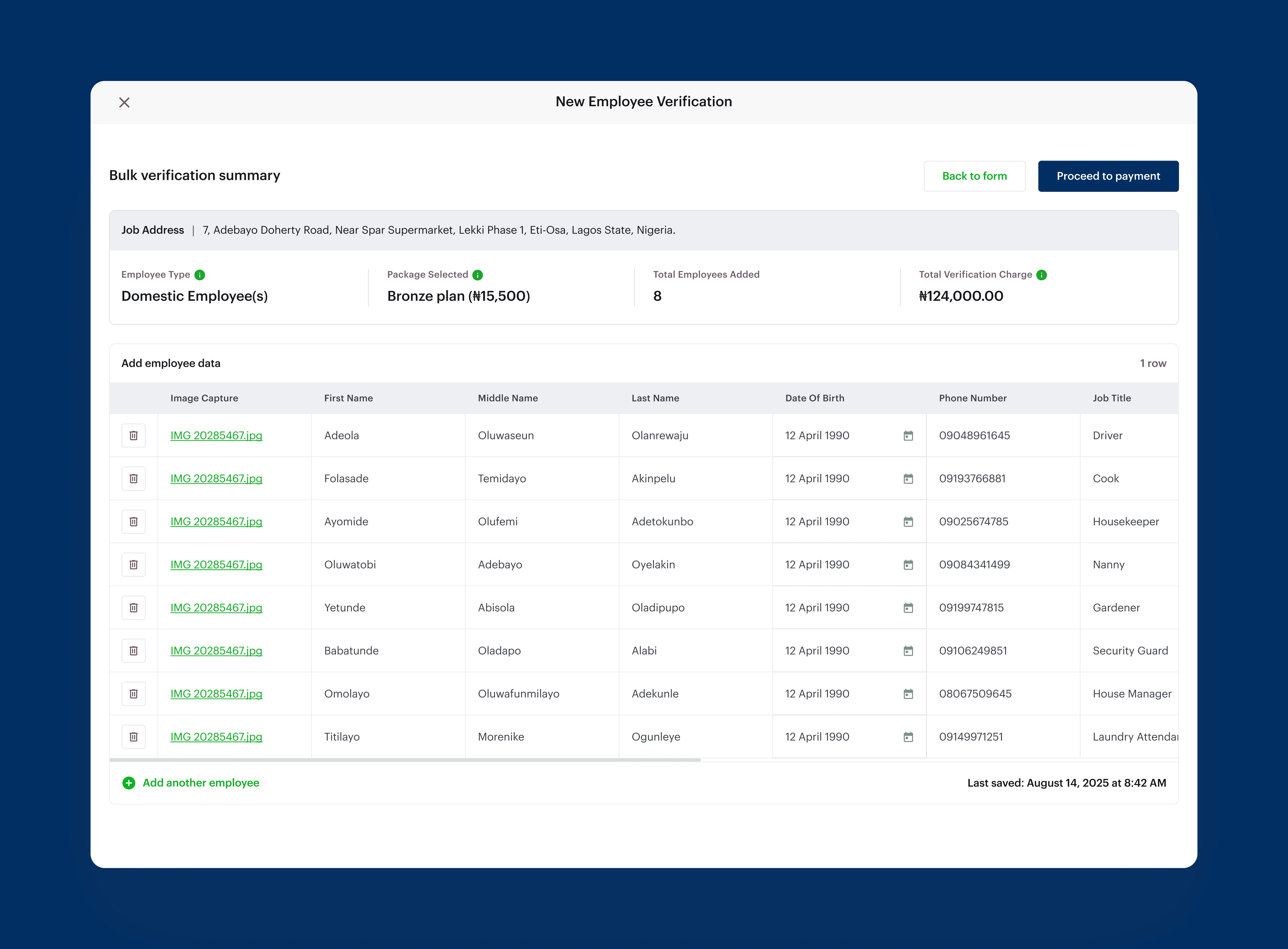
As the flow grew, it became clear that a single rigid method would not serve every employer. So I designed three verification paths, Capture Employee Myself, Send to Employee, and Bulk Verification, each tailored to different hiring contexts while keeping the experience consistent.
Throughout the process, I collaborated closely with engineers to validate feasibility and edge cases, and ran quick reviews with stakeholders to refine copy, reduce friction, and ensure the experience stayed simple for both employers and employees.
Employer Led Verification Flow (Employer Fills Employee Details)
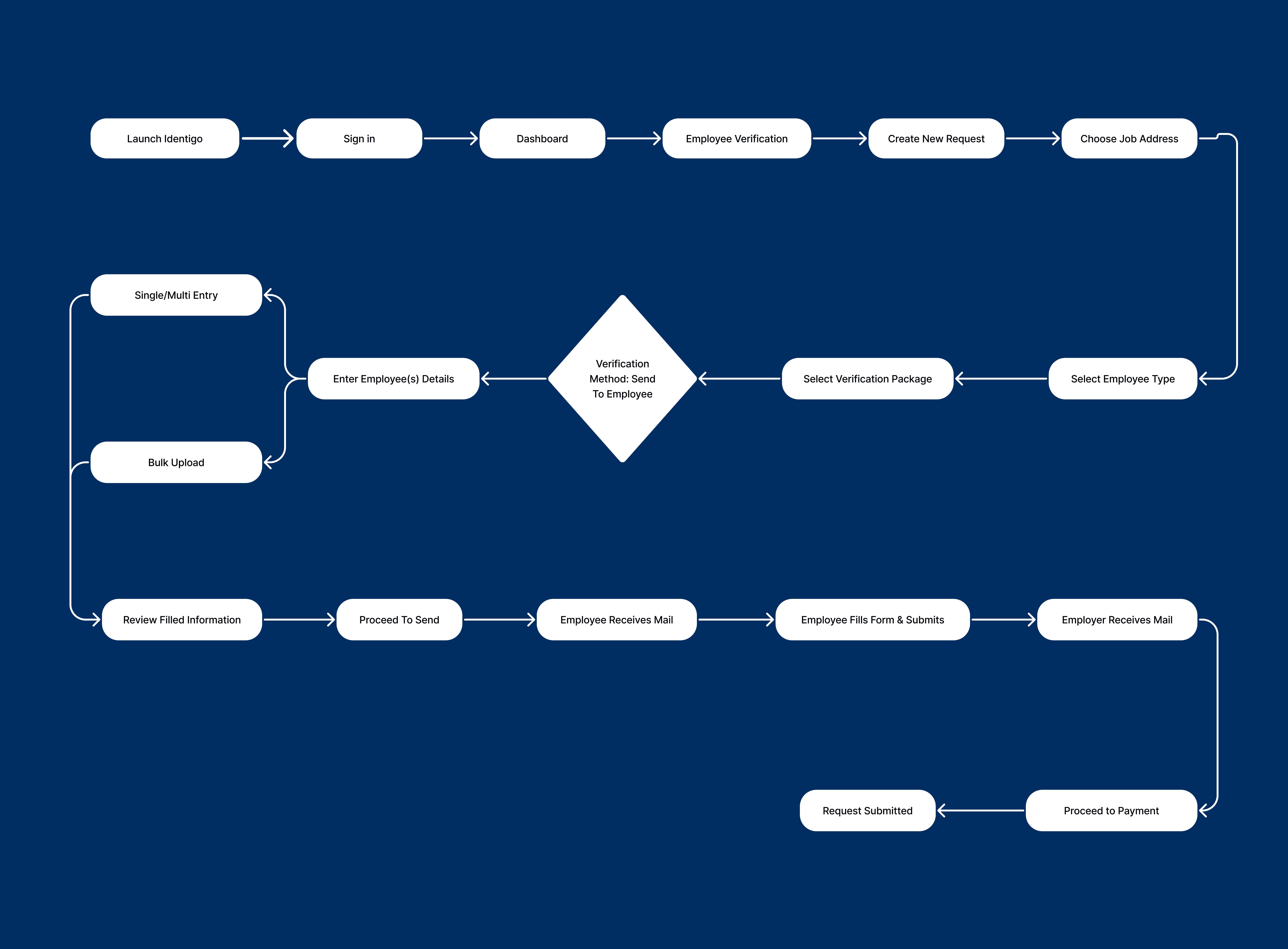
Send to Employee Verification Flow
Let's design
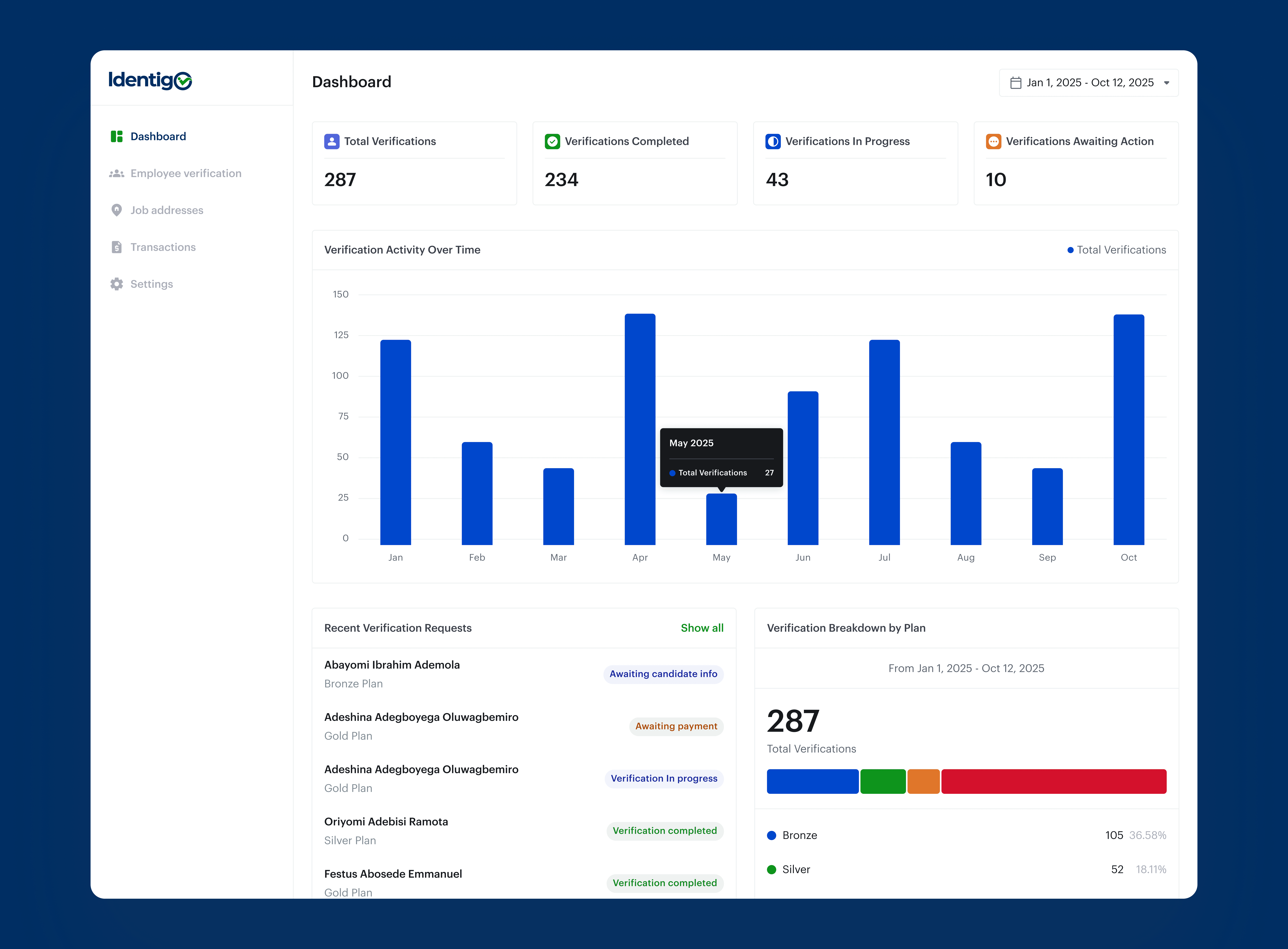
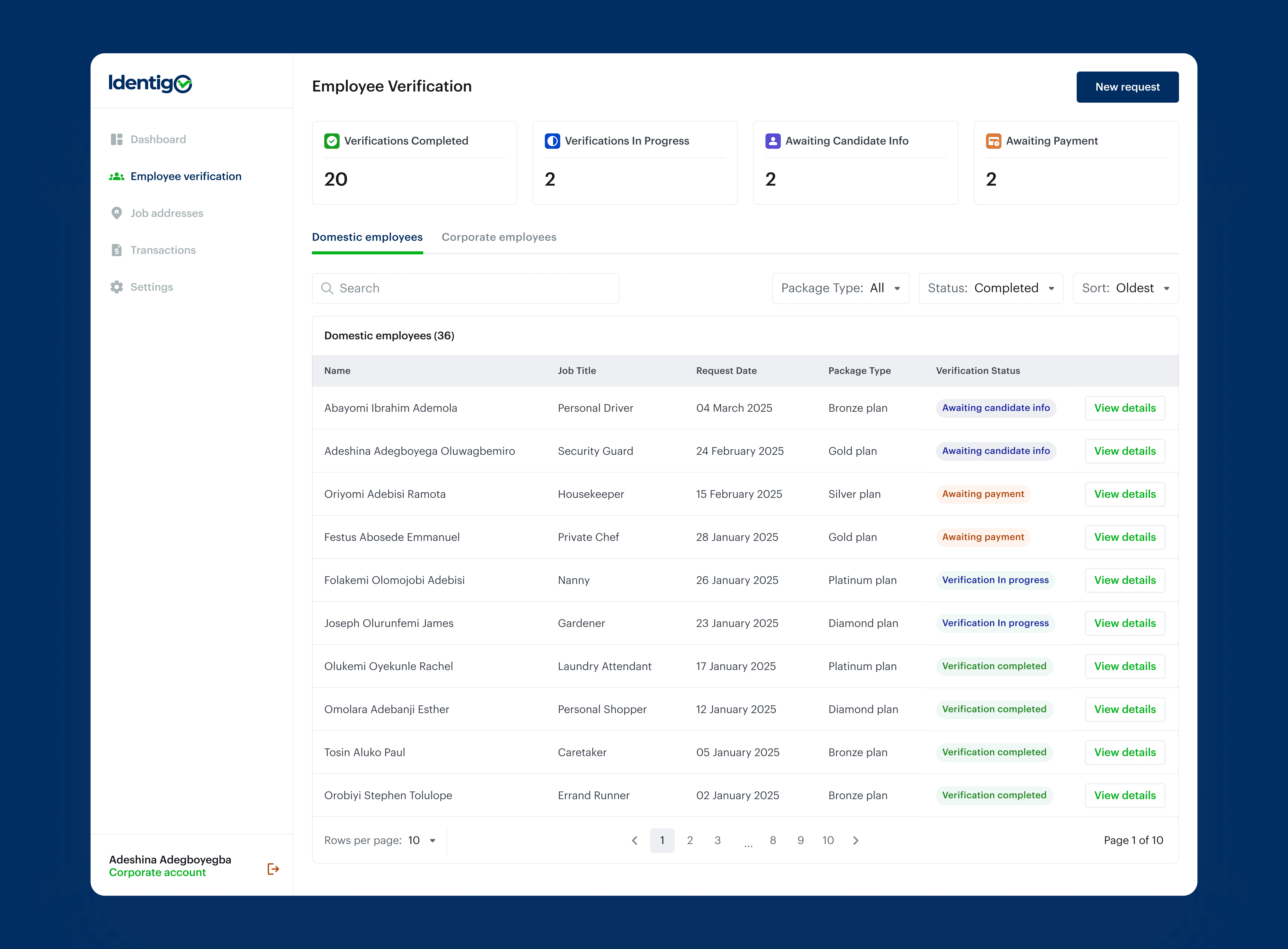
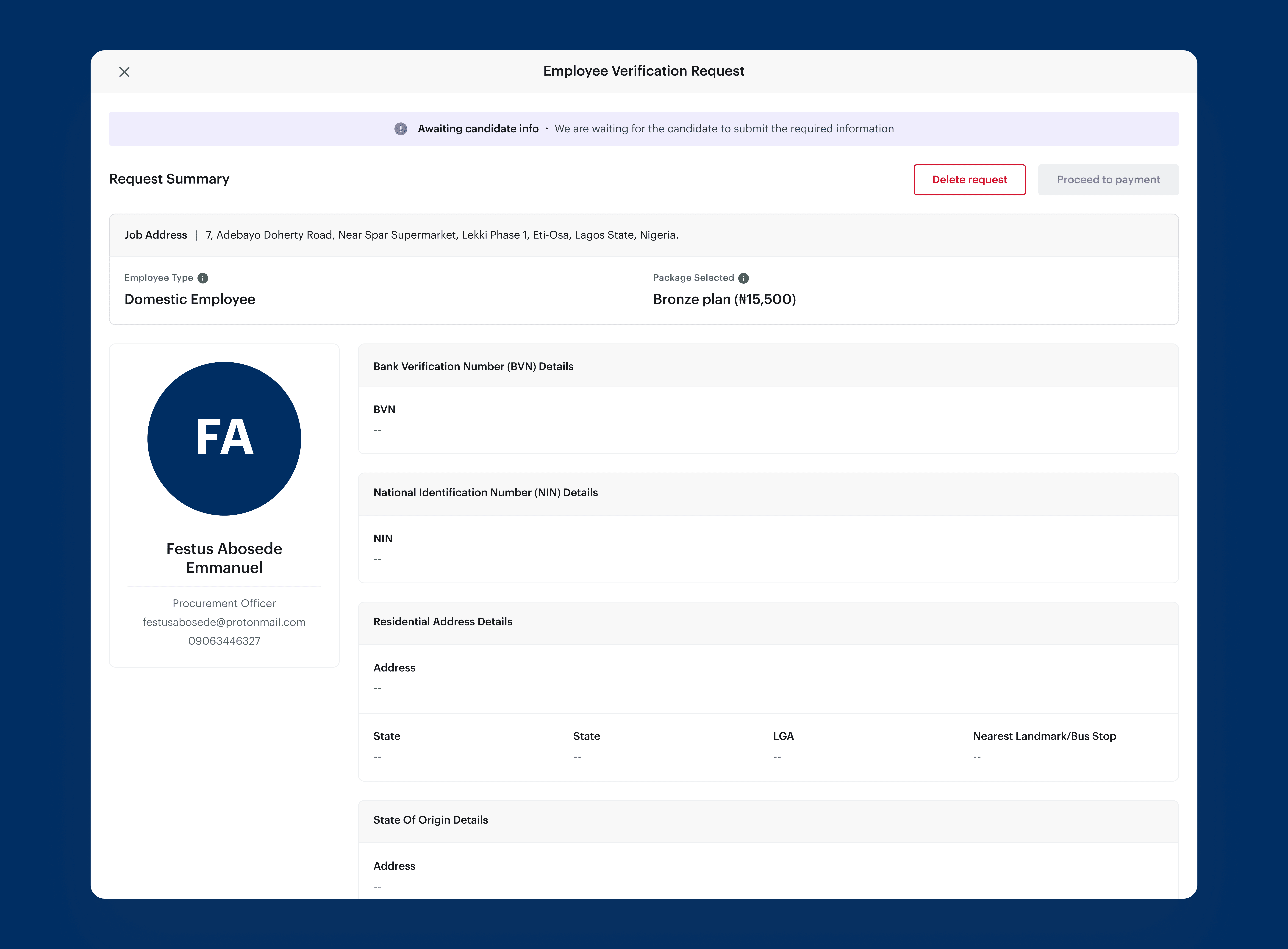
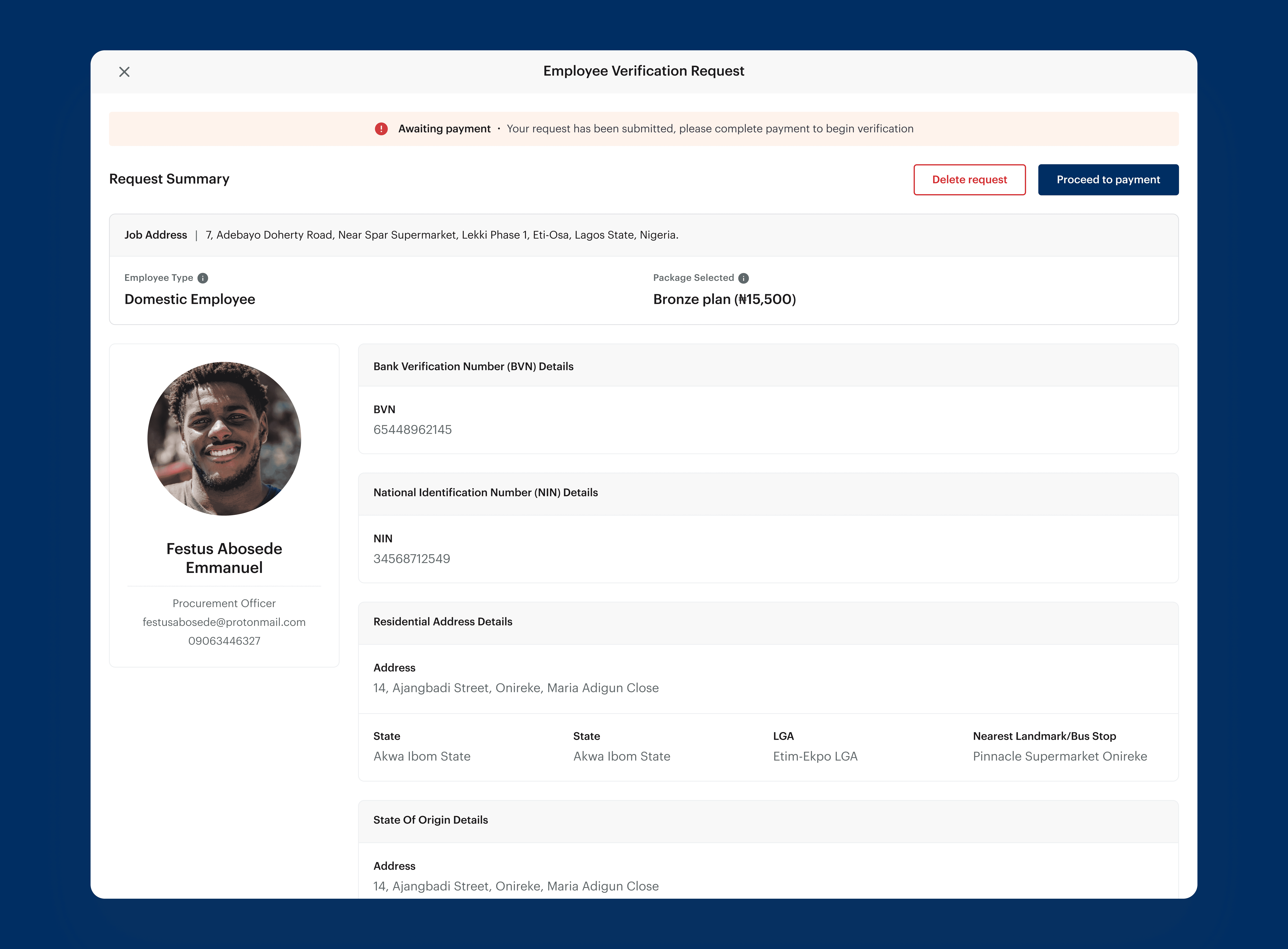
I came alive once I got into Figma. After mapping journeys, research, and edge cases, I focused on turning strategy into clickable flows. Refining the UI details and watching the product take shape was the most rewarding part, bringing everything together into a seamless, intuitive experience.
Curtain call
This project pushed me to design for speed, trust, and clarity in a process that often slows hiring down. It challenged me to think in systems, keep the experience simple, and balance flexibility with consistency for both employers and employees.
Identigo is still pre launch, and we are refining the product through testing. Metrics and results will be shared as it rolls out.
